Smokers who trust their healthcare providers are more likely to attempt quitting—and to succeed. Trust is built through honesty: acknowledging what patients already know, respecting their autonomy, and providing information without judgment.
Quitting smoking costs money: NRT, prescription medications, counseling, vaping products. The costs are modest compared to continued smoking—but they're upfront, and the upfront barrier excludes the poor. The economics of quitting are stacked against the disadvantaged.
Major nicotine policy changes—flavor bans, Tobacco 21, the synthetic nicotine amendment—happened in response to crises (the 'youth vaping epidemic'). Crisis-driven policy is reactive, poorly evaluated, and difficult to revise. The alternative is evidence-based reform.
The wattage at which a vaping device operates determines the temperature of the coil and the chemistry of the aerosol. Higher wattage produces more vapor—and more thermal degradation products. The power curve is the most important safety feature.
The regulatory barriers that keep independent vaping companies out of the market are creating an underground innovation ecosystem—startups developing products that can't reach consumers through legal channels. Innovation hasn't stopped. It's gone underground.
industry changesstartupsinnovationundergroundregulation
The CYP2A6 enzyme metabolizes nicotine. Genetic variation in CYP2A6 determines how fast nicotine is cleared from the body. Fast metabolizers smoke more, are more dependent, and have a harder time quitting. Metabolism genetics personalize addiction risk.
Long-haul truckers smoke at elevated rates. The job—sedentary, solitary, and demanding of alertness for hours on end—is a perfect storm for nicotine use. The trucker's cigarette is a tool for staying awake and a companion in isolation.
Adolescents don't take risks because they're ignorant of the consequences. They take risks because the developmental balance between reward-seeking and impulse control tilts toward reward. Prevention must work with this developmental reality.
Tobacco farmers have deep knowledge of their crop—and limited knowledge of alternatives. Transition requires education: not just training in new crops, but the business skills, market access, and technical support to make alternatives viable.
Cigarette taxes are regressive—they take a larger share of income from the poor. The regressivity can be addressed: dedicate tax revenue to cessation support for low-income smokers, subsidize reduced-risk products, and make the tax system progressive.
Framing nicotine addiction as a disease reduces stigma and enables medical treatment. It also removes agency—the addict is a patient, not an agent. The disease model is both a tool for compassion and a mechanism of control.
A slip is a single cigarette. A relapse is a return to regular smoking. Most cessation programs treat them the same: you slipped, you failed, reset your quit counter to zero. The messaging is demoralizing, inaccurate, and counterproductive.
Nicotine products cross borders. Regulation doesn't. The result: regulatory arbitrage, cross-border illicit trade, and inconsistent consumer protections. International cooperation is essential—and undermined by the ideological divisions in global tobacco control.
public healthinternationalcooperationcoordinationglobal
The success of a vaping product depends on user experience: how it feels in the hand, how it responds to the draw, how satisfying the throat hit is. UX design is as important as nicotine chemistry—and it's almost entirely neglected by the research community.
No major nicotine company has voluntarily exited the cigarette business. The obstacles: cigarettes generate the revenue that funds the transition, shareholders demand returns, and exiting would cede the market to competitors. Divestment is possible—just not profitable yet.
industry changesdivestmentcigarettesstrategytransition
When nicotine is removed, the brain's neurochemistry begins a complex recalibration. Receptor densities normalize. Neurotransmitter systems rebalance. The molecular recovery takes months—and the timeline maps onto the subjective experience of quitting.
Commercial fishing has one of the highest smoking rates of any profession. The isolation, the danger, the boredom—the cigarette at sea is a companion, a ritual, and one of the few pleasures available in a harsh environment.
The 'just say no' model doesn't work—adolescents need specific skills for resisting social pressure. Effective programs teach refusal skills, build self-efficacy, and create peer norms that support non-use. The skills-based approach is evidence-based and underused.
For most of agricultural history, farmers saved their own seeds. The practice is now restricted by intellectual property rights, corporate contracts, and the decline of traditional varieties. Seed saving is an act of resistance—and it's disappearing.
The FDA makes decisions about nicotine products based on evidence that is largely invisible to the public. The PMTA review process is opaque—the evidence submitted, the analysis conducted, and the basis for decisions are not publicly accessible.
Quitting smoking is not just a behavior change. It's an identity change. The smoker must reconstruct their sense of self—from 'smoker' to 'former smoker' to 'nonsmoker.' The identity reconstruction takes years and is the core psychological work of recovery.
Weight gain is the most commonly cited barrier to quitting—especially among women. Managing weight during cessation is possible with specific strategies: exercise, nutrition, and pharmacological support. The cessation system rarely provides them.
The average smoker cannot accurately compare the risks of smoking and vaping. This is not a failure of the smoker. It's a failure of the information environment—deliberately shaped by public health institutions that prioritized message simplicity over accuracy.
public healthhealth literacycommunicationresponsibilityinformation
A quality vaping starter kit costs $30-50. A pack of cigarettes costs $10. The smoker who lives paycheck to paycheck can afford the cigarettes. They can't afford the vape. The upfront-cost barrier is a structural obstacle to switching.
e-cigarettescostaccessequitybarriers
Products
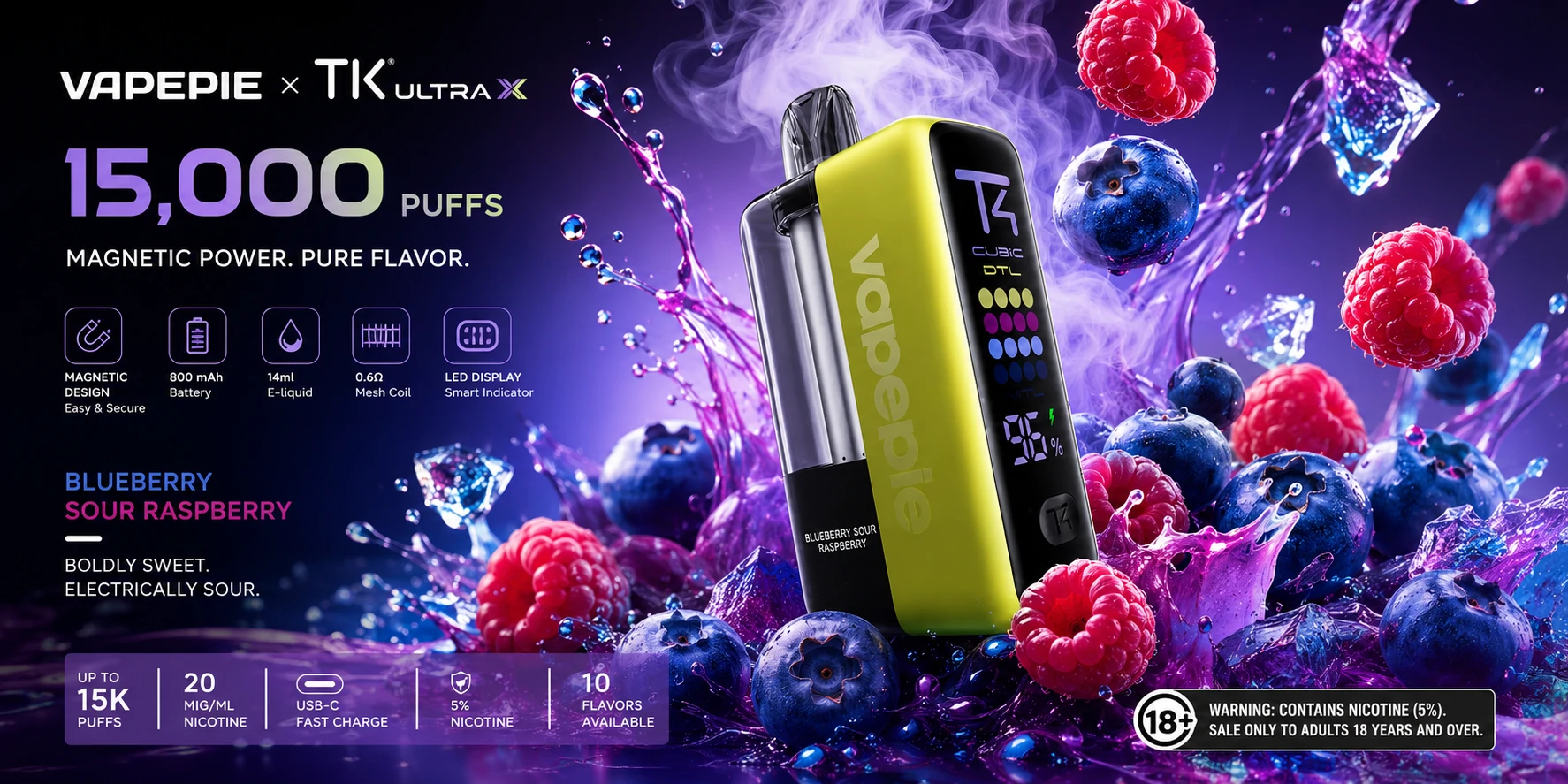
Explore VAPEPIE devices
Select a product to view details, highlights, and technical specifications.