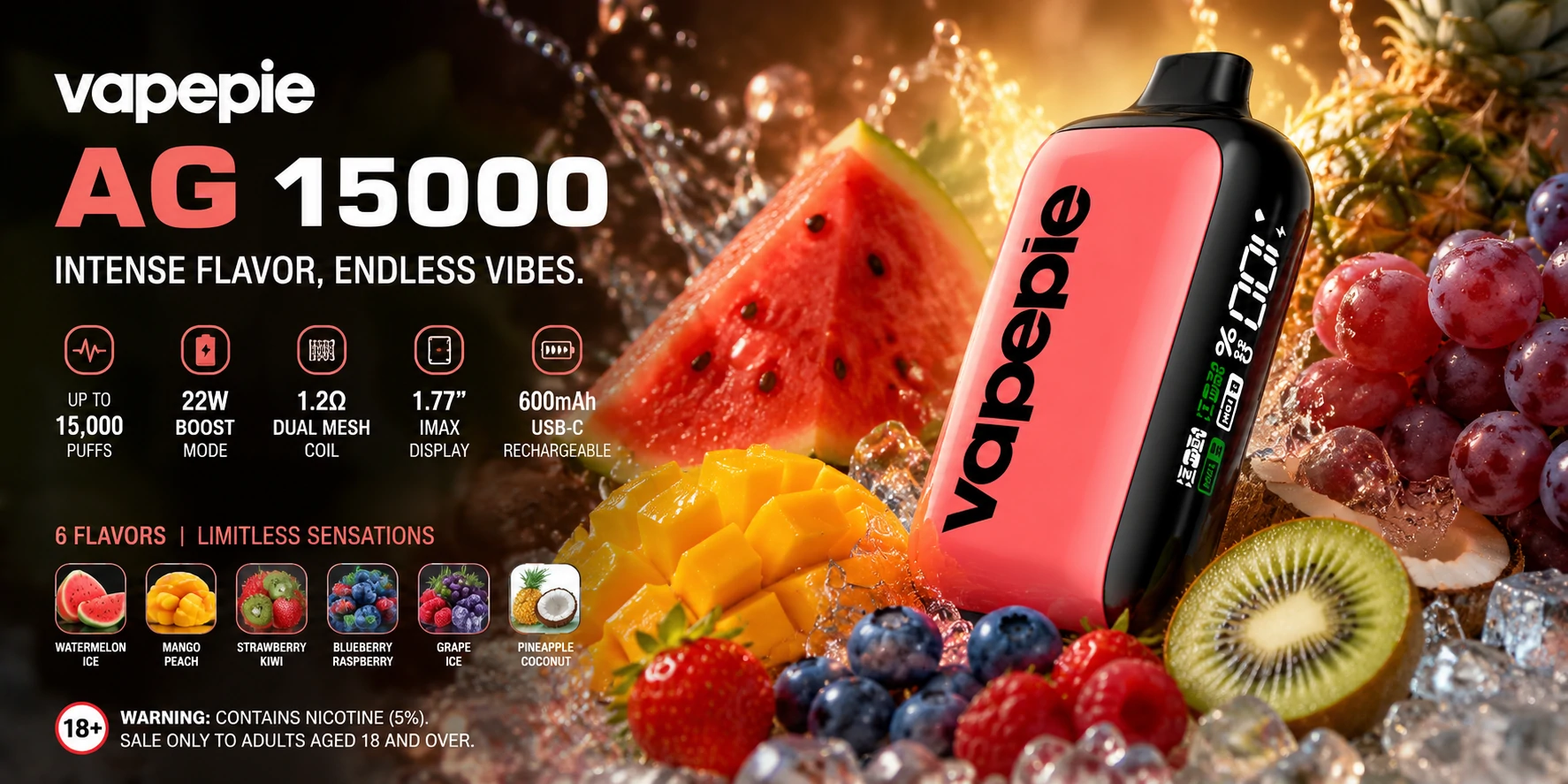
The Flavor Hunter: Inside the Global Supply Chain That Makes Your Vape Taste Like Mango
Behind every flavored vape is a global network of flavor chemists, extraction facilities, and regulatory arbitrageurs who turn raw botanicals into the thousands of flavor compounds that define the vaping experience. Their world is largely invisible to regulators—and to consumers.
The flavor in your vape didn't come from a fruit. It came from a flavor house—one of the dozen or so global companies (Givaudan, Firmenich, IFF, Symrise, Takasago, Mane) that produce the vast majority of flavor compounds used in food, beverages, cosmetics, and, increasingly, nicotine products. The mango flavor in a disposable vape is not mango extract. It's a proprietary blend of synthetic and natural aroma chemicals—esters, lactones, terpenes, aldehydes—designed by flavor chemists to reproduce the sensory experience of mango and optimized for the specific delivery conditions of a vaping device (temperature, aerosol particle size, interaction with nicotine and propylene glycol). The flavor house that developed the mango flavor for a vaping product probably also developed the mango flavor for a yogurt, a hard candy, and a scented candle. The supply chain for vape flavors is the same supply chain that flavors the rest of the consumer economy—and it is regulated under a framework designed for ingestion, not inhalation.
The regulatory gap is the central fact of the flavor supply chain. Flavor compounds used in food are regulated as 'generally recognized as safe' (GRAS) for ingestion by the FDA and equivalent agencies in other countries. The GRAS determination is based on a history of safe use in food or on scientific evidence that the substance is safe when ingested. It says nothing about the safety of the substance when heated and inhaled. The lungs are not the stomach. The respiratory epithelium is more sensitive to chemical irritants, and the metabolic pathways that detoxify ingested substances do not operate in the same way in the lung. A flavor compound that is safe to eat—diacetyl, the buttery flavor compound in microwave popcorn, is the classic example—can cause severe respiratory disease when inhaled (diacetyl is associated with bronchiolitis obliterans, 'popcorn lung,' in workers exposed to high concentrations). The GRAS framework does not address inhalation risk, and there is no equivalent framework for inhalation safety that applies to vape flavors.
The flavor industry's relationship with the vaping market is complex and largely opaque. The major flavor houses, sensitive to reputational risk and regulatory uncertainty, generally do not publicly market their products for vaping applications. Their e-liquid flavors are sold to intermediate formulators—companies that purchase flavor compounds from the flavor houses, blend them into vaping-specific formulations, and sell those formulations to e-liquid manufacturers. The formulators are small, privately held, and operate below the radar of public attention and regulatory scrutiny. The e-liquid manufacturers—the companies that mix the flavor formulations with nicotine, propylene glycol, and vegetable glycerin to produce finished vaping liquids—are even more fragmented, with hundreds of small and medium-sized producers. The supply chain is deliberately opaque: the flavor houses insulate themselves from the downstream vaping market, the formulators operate in regulatory gray zones, and the e-liquid manufacturers face the brunt of the regulatory burden without the resources or expertise to conduct the safety testing that regulation demands.
The safety science on vape flavors is immature and urgently needed. The number of individual flavor compounds used in vaping products is estimated at over 7,000, and the number of distinct flavor formulations (each containing multiple compounds at varying concentrations) is in the tens of thousands. The inhalation toxicology of the vast majority of these compounds and formulations is unknown. The research that exists—primarily from academic laboratories and a small number of FDA-funded studies—has identified several categories of concern: compounds that decompose at vaping temperatures to form aldehydes (respiratory irritants and potential carcinogens); compounds that are known sensitizers or allergens when inhaled; and compounds that, while safe when inhaled individually at low concentrations, may have additive or synergistic effects when inhaled in combination (the 'cocktail effect'). The research community's capacity to evaluate the safety of the vape flavor chemical space is orders of magnitude smaller than the chemical space itself. Every flavor formulation on the market is, in effect, an uncontrolled experiment in inhalation toxicology.
The regulatory response has been to target flavors as a category rather than evaluating individual compounds. Flavor bans—prohibitions on the sale of flavored vaping products, with varying exemptions for tobacco and menthol—have been implemented in multiple US states and countries on the grounds that flavors attract youth. The bans have the effect of eliminating the chemical safety problem by eliminating the products, avoiding the need for the compound-by-compound safety evaluation that the regulatory system is not resourced to conduct. The approach is defensible from a youth-prevention perspective but problematic from a harm-reduction perspective: the flavors that attract youth are also the flavors that attract adult smokers away from cigarettes, and eliminating flavors eliminates both the risk of youth initiation and the benefit of adult switching. The flavor ban approach also leaves entirely unaddressed the safety of the flavor compounds used in tobacco-flavored and menthol-flavored products, which are subject to the same inhalation safety uncertainties as the banned flavors.
The path forward requires regulatory innovation that the current system is not designed to deliver. A vapor inhalation safety framework—analogous to the GRAS framework for food, but specific to the respiratory risks of heated and inhaled substances—would provide a pathway for flavor manufacturers to demonstrate the safety of their compounds under vaping conditions. Such a framework does not exist in any country. Building it would require investment in inhalation toxicology research capacity, the development of standardized testing protocols for vaping-specific exposure conditions, and a regulatory infrastructure capable of evaluating the safety of thousands of compounds in a framework that balances precaution with the public health benefits of making appealing alternatives available to smokers. This is a multi-decade project, and it has barely begun. The flavor supply chain, in the meantime, continues to operate largely outside the regulatory perimeter—flavoring the products that millions of people inhale, using compounds that have been tested for safety in food but not in lungs.
Shareable insight: The mango flavor in your vape wasn't tested for inhalation safety. It was tested for safety in food—a completely different route of exposure, with completely different toxicological implications. The flavor supply chain operates in a regulatory gap between the food safety system (which doesn't address inhalation) and the tobacco regulatory system (which doesn't have the capacity to evaluate individual flavor compounds).